
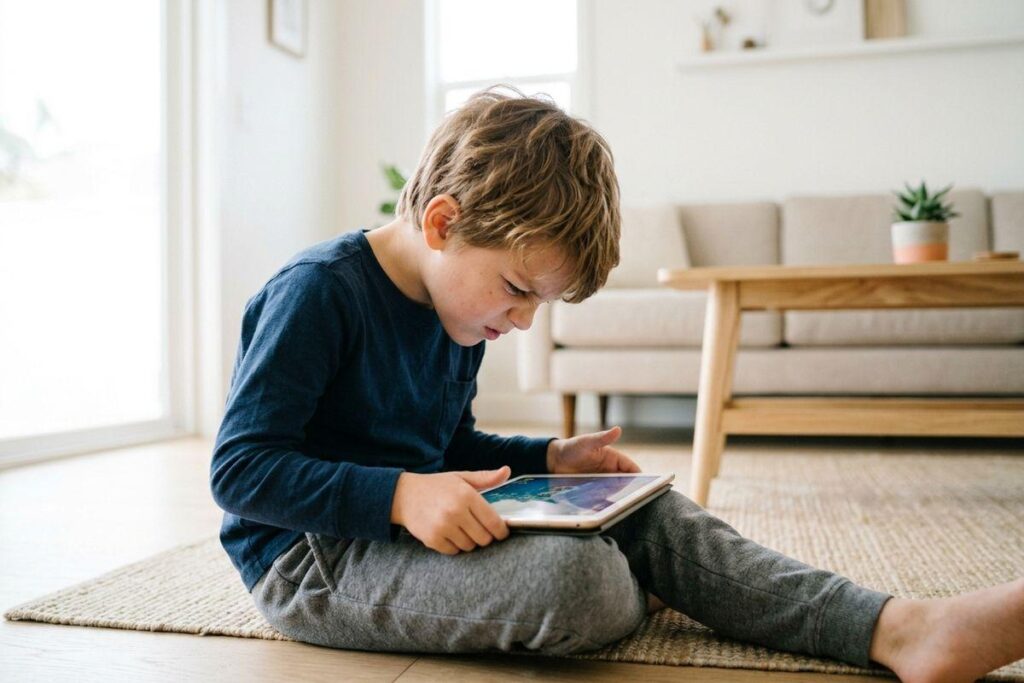
Kids rarely walk up and announce that their vision looks blurry. Instead, they squint at the TV, scoot closer to the tablet, or shove their homework away in frustration.
Little habits like these say a lot about how well their eyes are developing. Some children even adjust so gradually to blurry vision that they don’t realize anything’s wrong, which is part of why eyesight problems can start so young.
Here are the 10 signs to watch for:
- Squinting to see clearly
- Tilting their head
- Covering one eye
- Holding books or screens too close
- Losing their place while reading
- Avoiding reading or homework
- Rubbing their eyes often
- Headaches after close-up work
- Watery eyes during focused tasks
- Sensitivity to bright light
Recognize these signs early, and you give your child’s eyes the support they need to keep up in school and play.
Why Early Eye Care Matters
Your child learns through their eyes. Reading a chapter book, catching a ball, or copying notes off a whiteboard all depend on clear vision.
When their sight is off, everyday tasks feel harder than they should. Many eye issues respond well to care when an optometrist finds them early, while your child’s eyes are still developing.
The 10 Signs
Some of these signs show up during quiet moments, like reading. Others show up in how your child moves through the day. Here’s what each one looks like.
1. Squinting to See Clearly
Squinting sharpens a blurry image for a moment, so it’s an easy habit to miss. Watch for it during cartoons, at the dinner table, or while doing homework.
2. Tilting Their Head
Some kids tilt their head to line up what they’re looking at. This can help one eye take over when the other isn’t focusing as well.
3. Covering One Eye
Covering or closing one eye is another way kids compensate for uneven vision. Both of these habits can point to nearsightedness or eyes that don’t align the same way.
4. Holding Books or Screens Too Close
Notice how close your child holds a book or tablet. If their nose nearly touches the page, their eyes are likely working overtime to focus.
5. Losing Their Place While Reading
Does your child lose their spot on the page often, or trace each line with a finger? That’s usually a sign the words aren’t staying sharp and steady as they read.
6. Avoiding Reading or Homework
Reading takes real effort when the words won’t come into focus. So don’t be surprised if your child puts off homework or avoids books altogether.
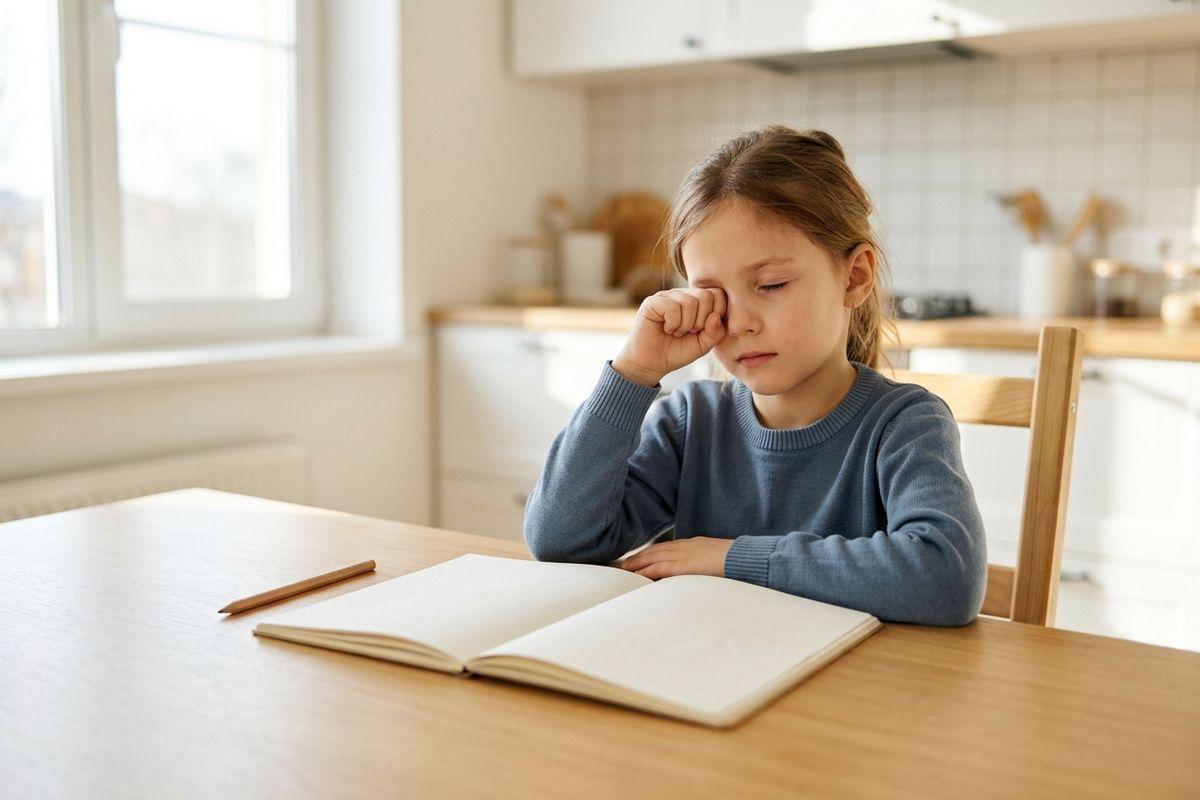
7. Rubbing Their Eyes Often
Poor vision leads to tired eyes, and tired eyes often lead to rubbing. If your child rubs their eyes a lot, especially after reading or screen time, their eyes may be straining to stay clear.
8. Headaches After Close-Up Work
Pay attention to headaches that show up after coloring, reading, or other close-up tasks. That timing is a strong clue the eyes are working too hard.
9. Watery Eyes During Focused Tasks
Watery eyes during homework or screen time can also point to strain. Pair this with any of the other signs, and it’s worth a closer look.
10. Sensitivity to Bright Light
Squinting or turning away from bright light is easy to write off as a fluke. But when it happens alongside other signs, treat it as one more piece of the puzzle.
Common Vision Problems Behind These Signs
A handful of familiar conditions cause most of these habits. Here’s a quick rundown:
- Myopia (nearsightedness): Far-off objects look blurry.
- Hyperopia (farsightedness): Close-up objects are harder to focus on.
- Astigmatism: Vision looks stretched or distorted at any distance.
- Amblyopia, or lazy eye: One eye works less than the other.
- Strabismus: The eyes point in different directions.
An optometrist can check for all of these problems during a single visit.
When to Schedule an Eye Exam
Eye care starts early. Newborns and toddlers should get basic checks to confirm their eyes are developing on track, and the visits continue from there.
- Schedule vision sharpness tests between ages 3 and 5.
- Book regular screenings from ages 5 to 18, as school demands grow.
A comprehensive exam looks past the standard eye chart. The optometrist checks vision sharpness, eye alignment, depth perception, and overall eye health, which gives a fuller picture than a quick school screening.
Support Your Child’s Vision at Home
If your child is nearsighted, ask about ways to slow how fast myopia progresses. Specialty lenses and low-dose atropine drops are 2 common options, and an optometrist can build a plan that adjusts as your child grows.
Screen time adds up fast, so teach your child the 20-20-20 rule: every 20 minutes, look at something 20 feet away for 20 seconds. Send them outside when you can, too. Natural light and distance viewing give growing eyes a real break.
Give Your Child’s Eyes the Attention They Deserve
Notice one of these signs? Don’t wait for it to get worse.
Schedule a comprehensive eye exam with Total Vision La Mesa and let their team take a closer look. Your child deserves every chance to see their world clearly.
