

Watery eyes show up at the worst times. Mid-meeting, out on a walk, or just sitting at your desk with no wind or sad movie in sight. It’s an odd kind of annoying, since you often can’t point to what set it off.
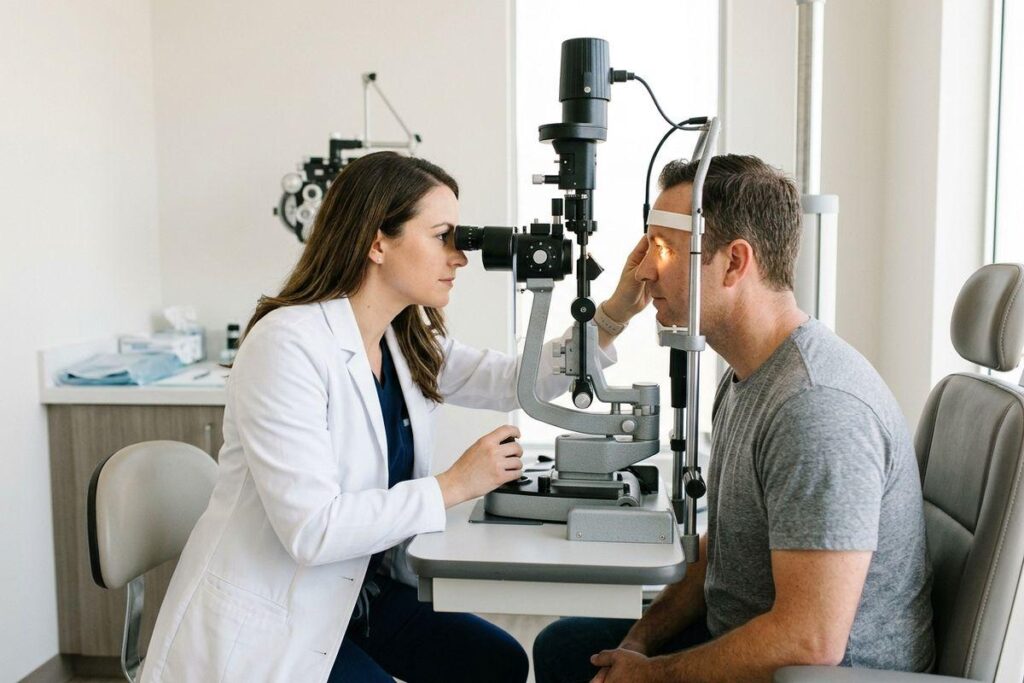
Your eyes water when tear production and drainage fall out of balance, and that imbalance can come from dry air, allergies, a blocked tear duct, or a few other causes. An optometrist can help you figure out which one applies to you.
How Tears Work in Your Eyes
Your eyes rely on tears more than you’d think, and you actually produce 3 different kinds.
Basal tears keep your eye surface moist all day. Reflex tears show up fast when an eyelash, a gust of wind, or a strong smell irritates your eye. Emotional tears arrive during a good cry or a big laugh.
Once tears finish their job, they drain through tiny openings near the inner corner of your eye, right next to your nose. Picture a sink: when the tap runs steady and the drain stays clear, everything feels fine. Make more tears than the ducts can handle, or clog that drain, and the overflow runs down your cheek.
Common Reasons Your Eyes Water
A handful of things can throw that balance off, some environmental and some tied to your health. Start with what’s happening around you.
Environmental Triggers
Cold weather, wind, and smoke can push your eyes into reflex-tear mode fast. Dry indoor air during winter pulls moisture right off the surface of your eye, so your eyes work overtime to keep up.
Dust, pollen, and pet dander irritate the surface too. One walk past a blooming yard or a dusty bookshelf can set off a steady trickle.
Health-Related Sources
Sometimes the cause sits closer to home. Dry eye often makes your eyes water more, which sounds backward until you picture that overworked sink again trying to keep up.
A blocked tear duct near your nose stops tears from draining properly, so they pool and spill instead.
Watch for these health-related sources too:
- Allergies that inflame the surface of your eye
- Infections that leave your eyes red and irritated
- Styes, the tender bumps that form along your eyelid line
- Blepharitis, inflammation along the edge of your eyelids
Who’s Most Likely to Have Watery Eyes?
Age plays a role in how often your eyes water, and it shows up differently depending on where you fall on that spectrum.
Newborns’ tear ducts are still forming, so their eyes can stream during the first few months. Most of these cases clear up on their own once the ducts finish opening.
Older adults notice watering for a different reason entirely. Over time, eyelids can change position slightly, and that small change disrupts how tears spread across the eye and reach the drain. When the eyelid pulls away from the surface, tears roll down the cheek instead of draining where they should.

How to Stop Watery Eyes at Home
Mild watering doesn’t always need a trip to the exam chair. A few small changes at home can bring real relief.
Simple Remedies to Try
Start with the basics and give each one a few days to work:
- Use preservative-free artificial tears to soothe a dry, irritated surface.
- Rest a warm compress over closed eyes for 5 to 10 minutes to loosen clogged oil glands.
- Run a cool-mist humidifier to add moisture back into dry indoor air.
- Cut back on screen time, and remember to blink more often while you work.
When pollen or dust is the culprit, a few small changes can help. Antihistamine eye drops or oral options can ease the itch and reduce the flood of tears.
Cutting down on triggers indoors makes a difference too. Wash bedding often, keep windows closed on high-pollen days, and wipe down dusty surfaces to give your eyes a break.
When to Book an Eye Exam
Home care handles a lot, but a few signs mean it’s time for a closer look. Book an exam if you notice any of these:
- Sudden changes in your vision or eye pain
- A constant feeling that something’s stuck in your eye
- Watering that won’t let up no matter what you try
- Redness or discharge that sticks around for more than a few days
- Swelling near your tear ducts or eyelids
Give Your Eyes a Break
Watery eyes usually have a clear cause once someone takes a real look, and most respond well to the right mix of home care and professional guidance. Reach out to Total Vision La Mesa and schedule your eye exam to get answers instead of guesses.
