
Do you find yourself squinting at street signs after sunset or feeling less confident driving at night? Maybe you need to turn on every light in the room just to read a book in the evening. If navigating in the dark feels more challenging than it used to, you’re not alone. It’s a common concern that the team at Total Vision La Mesa helps people address.
The main reason your night vision changes is due to natural, age-related shifts in your pupils, lens, and the surface of your eyes. These small adjustments can add up over time, affecting how clearly you see in low-light conditions.
How Your Eyes Naturally Change Over Time
Smaller Pupils & Slower Reactions
As you get older, the muscles that control your pupils can become less responsive. This means your pupils may not open as wide in the dark, limiting the amount of light that reaches the back of your eye. As a result, images can appear dimmer and less defined than they used to.
- Pupil muscles can lose some strength with age
- Less light enters your eye in dim settings
- Adjustment to darkness takes longer than before
Changes to Your Eye’s Lens & Surface
The clear lens inside your eye also changes. It can become less flexible and cloudier over the years, scattering light rather than focusing it properly. This scattering is what creates that frustrating glare from oncoming headlights and streetlights.
- The lens gets cloudy & scatters light
- Your eyes may produce fewer tears
- Surface dryness can cause blurriness
Common Night Vision Difficulties You May Notice
Challenges While Driving After Dark
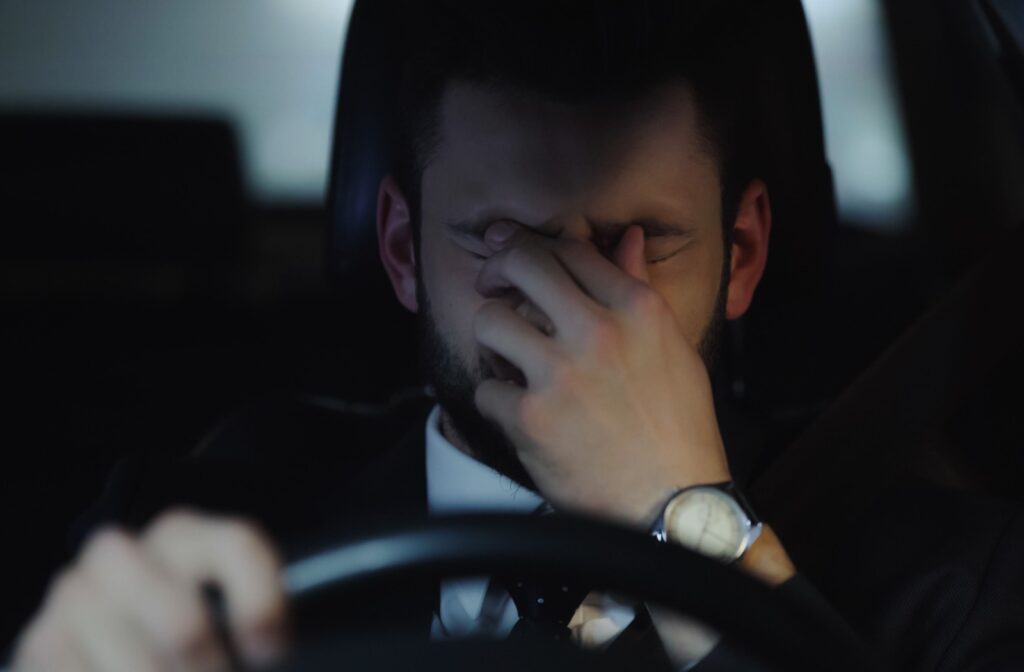
Driving at night often makes these changes more obvious. The contrast between bright headlights and a dark road can be particularly difficult for your eyes. You might find it harder to judge distances or react quickly to unexpected things on the road.
- More glare from headlights & streetlights
- Trouble seeing road signs clearly
- Difficulty with wet or reflective roads
Problems in Low-Light Environments
You may also notice challenges in familiar indoor settings. A dimly lit restaurant menu becomes hard to decipher—a common sign of age-related farsightedness—or walking through a dark hallway at home feels a bit uncertain. These are common signs that your eyes are struggling to adapt to low light.
- Need more light to read
- Struggle to navigate a dark room
- Colors seem less vibrant at night
The Role of Overall Health & Nutrition
Nutrients That Support Your Vision
What you eat can affect your eye health. Nutrients like vitamin A are important for the retina—the part of your eye that helps you see in the dark. A balanced diet with foods like carrots, sweet potatoes, leafy greens, and fish can contribute to healthy vision.
- Vitamin A helps the retina work
- A diet rich in certain vitamins supports eye health
- A vitamin deficiency can affect your ability to see at night
Why Regular Eye Exams Matter
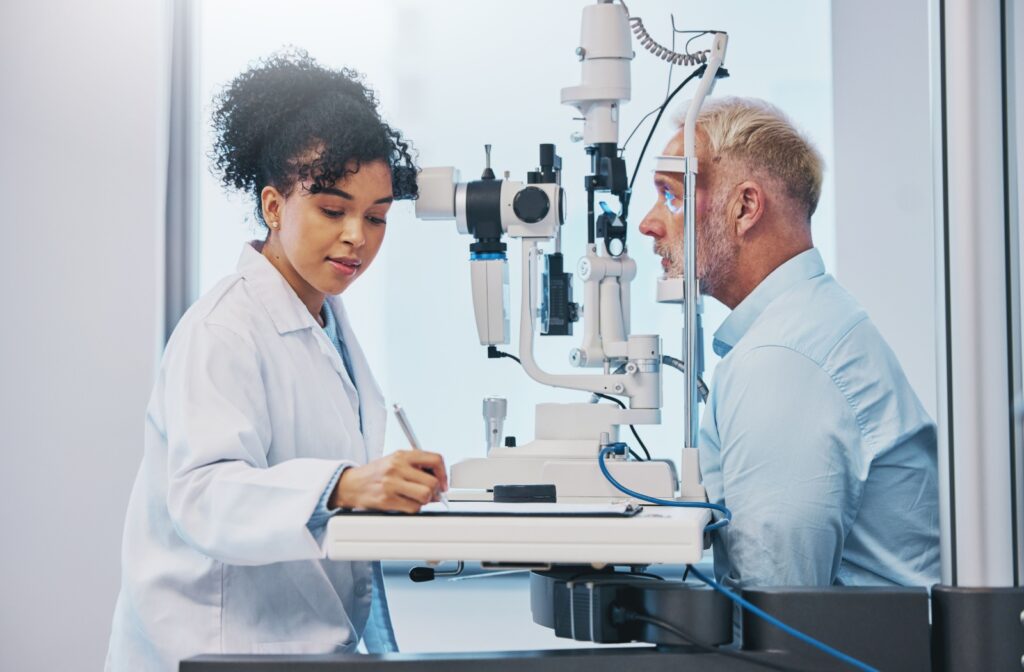
Regular check-ups are a key part of maintaining your vision. An eye exam does more than just update your prescription—it allows an eye doctor to check for underlying conditions that could be affecting how you see after sundown. Identifying issues early can help protect your vision in the long term.
- Check for underlying eye conditions
- Keep your prescription up to date
- Address vision changes early
Practical Tips to Navigate the Dark
Adapt Your Home & Habits
You can make small changes at home to help your eyes feel more comfortable in the dark. Increasing the ambient light in your living spaces can make a noticeable difference, helping you move around more easily, safely, and reducing the risk of falls.
- Add more lamps & night lights
- Keep a small flashlight handy
- Give your eyes a few minutes to adjust to darkness
Make Your Night Drive Safer
A few simple habits can also improve your comfort when driving at night. Reducing sources of glare inside and outside your car helps your eyes focus on the road. This can make your nighttime trips feel less stressful.
- Keep your windshield & headlights clean, and make sure your eyeglass lenses are smudge-free
- Dim your car’s dashboard lights
- Use the night setting on mirrors
When to See Your Eye Doctor in La Mesa
Discuss Your Vision Concerns
If you’ve noticed changes in your night vision, it’s a good idea to bring them up at your next appointment. When you visit your eye doctor in La Mesa, be ready to describe the specific issues you’re experiencing—whether it’s glare, blurriness, or trouble reading.
- Get a comprehensive eye exam
- Describe specific night vision issues
- Track any sudden changes
Explore Professional Solutions
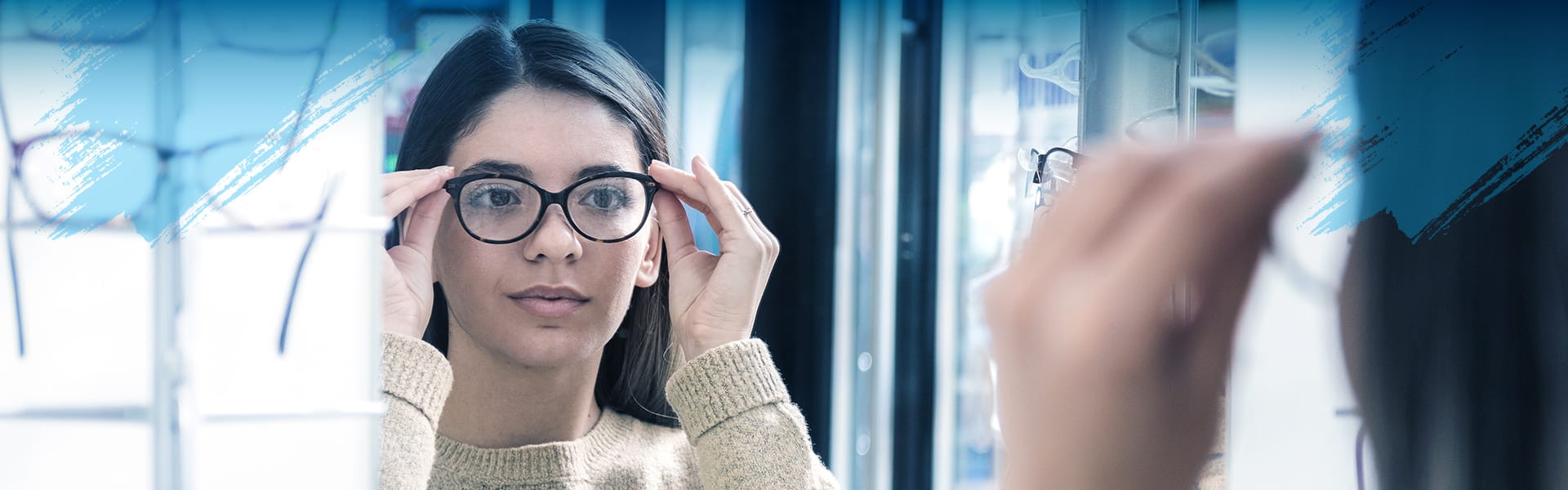
Your eye care team can suggest solutions tailored to your needs. Sometimes, an updated prescription for glasses is all it takes. Other options, like lenses with an anti-reflective coating, can also help reduce glare, and the team can recommend the right solution for you.
- Ask about lenses with an anti-reflective coating
- Get an updated glasses prescription
- Treat conditions like dry eye
Changes in night vision are a common part of aging, but you don’t have to accept them without support. To understand what’s behind your vision changes and explore your options, schedule a comprehensive eye exam with the team at Total Vision La Mesa today.
